You have decided to start monitoring your child’s phone with a parental-control app, and now you are facing the part nobody really prepares you for: telling them. It feels awkward, maybe even a little like admitting you do not trust them, and there is a strong temptation to just install it quietly and say nothing. Resist that temptation, because how you have this conversation matters more than almost any setting inside the app, and getting it right turns monitoring from a source of conflict into something your child can actually live with.
This guide is about that conversation: why doing it openly beats doing it in secret, how to frame it so it lands as care rather than suspicion, what to say at different ages, and how to handle the pushback you will almost certainly get. The good news is that this is a solvable problem, and most children, once the initial grumble passes, adjust to transparent monitoring far more easily than parents fear.
Why secretly monitoring your child’s phone is the wrong instinct
Let us deal with the tempting shortcut first, because it is worth understanding exactly why it backfires. Installing monitoring in secret feels safer in the moment, no argument, no awkwardness, but it plants a problem that grows.
The core issue is what happens when your child finds out, and they very often do, because kids are more tech-literate than we assume and secrets on a shared device rarely stay hidden. When a child discovers they have been watched without their knowledge, the damage is not to their phone habits; it is to their trust in you. The lesson they take is not “my parent cares about my safety”. It is “my parent spies on me and lies about it”. And a child who has learned that will not come to you when something genuinely frightening happens online, which is the exact moment monitoring is supposed to help. They will also, quite reasonably from their point of view, start hiding their real activity somewhere your app cannot see, a second phone, a friend’s device, an app you do not know about, so the surveillance stops working even as it poisons the relationship.
Some parents ask whether a serious, specific safety fear justifies monitoring a child without telling them. Our view is that it does not, and that the right response to a real fear is to involve the child, the school, and where necessary the police or a safeguarding professional rather than to install something quietly. Secret monitoring, even with good intentions, undermines the two things that actually keep a child safe: your relationship and their willingness to talk to you.
The reframe: monitoring is a safety tool, not a spy tool
The whole conversation gets easier once you are clear, in your own head, about what the monitoring is actually for. It is not there to catch your child out, read their private jokes with friends, or control them. It is there for the same reason you taught them to cross the road and hold your hand in a car park: the online world has genuine dangers, and part of your job is to help them navigate it safely until they can do it alone.
If you believe that, and it is true, then you have nothing to be shifty about, and that confidence changes the whole tone. You are not confessing to something slightly shameful; you are explaining a sensible safety measure, the same way you would explain a seatbelt. Children can tell the difference between a parent who is embarrassed and evasive and one who is calm and matter-of-fact, and they respond far better to the second. So before you even open your mouth, get clear that this is care, not distrust, because that clarity will carry the conversation.
Have the conversation before, or as, you set it up
Timing matters. The ideal is to talk about it before the app goes on, or right as you set it up together, not weeks later when they stumble across it. For a first phone, the very best moment is the day it arrives: monitoring introduced as simply part of how the phone works, from day one, is barely controversial, whereas monitoring added later to a phone a child already treats as fully theirs feels like something being taken away.
If you are adding it to a phone they have had for a while, you cannot go back in time, but you can still be straightforward. Sit down at a calm moment, not in the middle of a row about screen time, and tell them what you are doing and why, before or as you install it, so the first they hear of it is from you and not from a notification they spot later.
How to actually say it
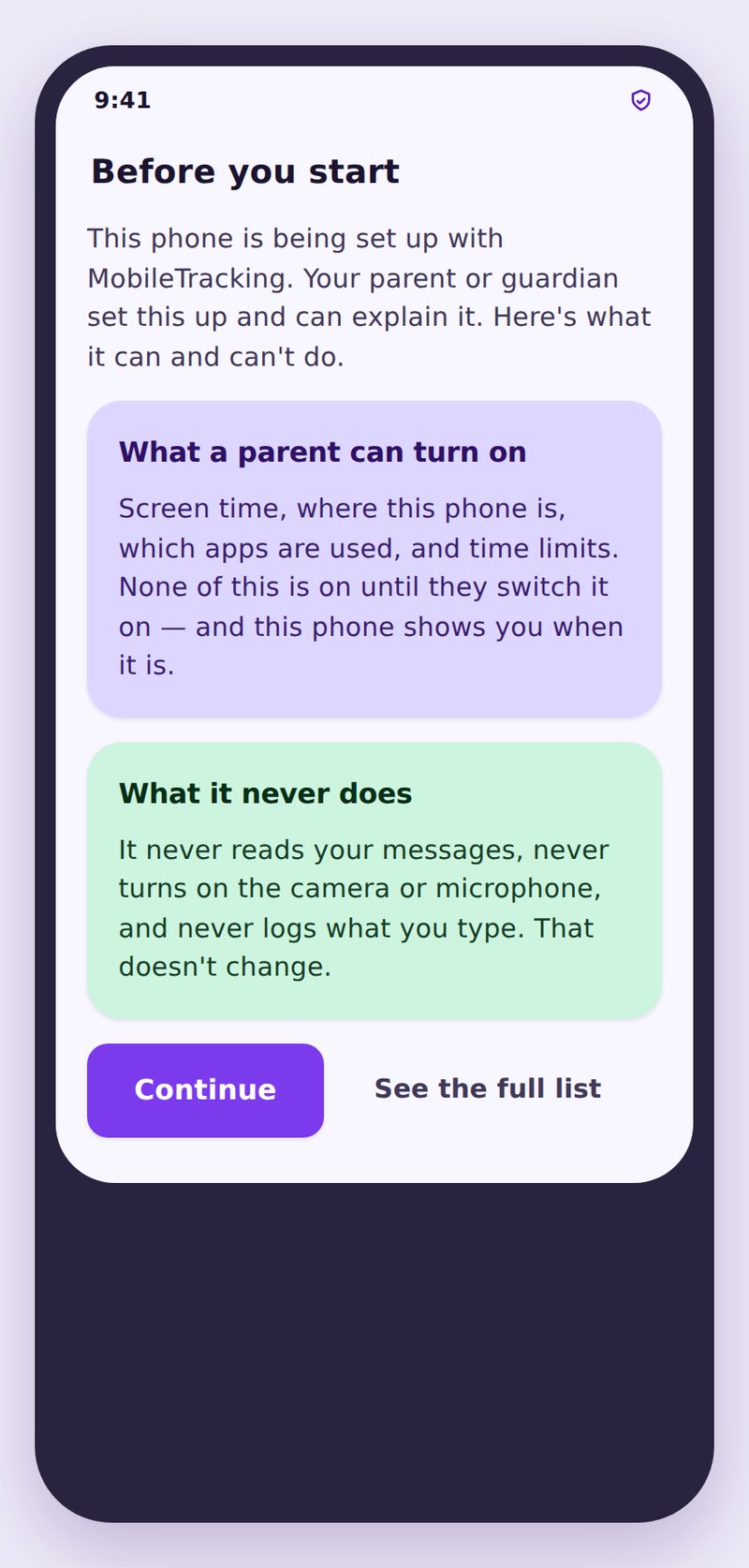
Keep it calm, honest, and short. You are not delivering a lecture or a warning; you are explaining a decision. Something like this works as a starting point, adjust it to your child and your voice: “As you spend more time online, I want to help you stay safe, the same way I do in the real world. So we’re going to have an app on your phone that helps me do that. It’s not there to snoop on your private chats with your friends, it’s there so I can help if something goes wrong, and so we can keep your screen time sensible together. I’ll always be straight with you about it.”
Three things make that work. It leads with the reason (safety), not the mechanism (surveillance). It is honest about the limits, you are not pretending you will not see anything, but you are clear you are not interested in their ordinary private life. And it promises transparency, which is the single most reassuring thing you can offer, because the fear underneath most kids’ resistance is not “you’ll keep me safe”, it is “you’ll read everything and use it against me”.
Be specific about what you will and will not do
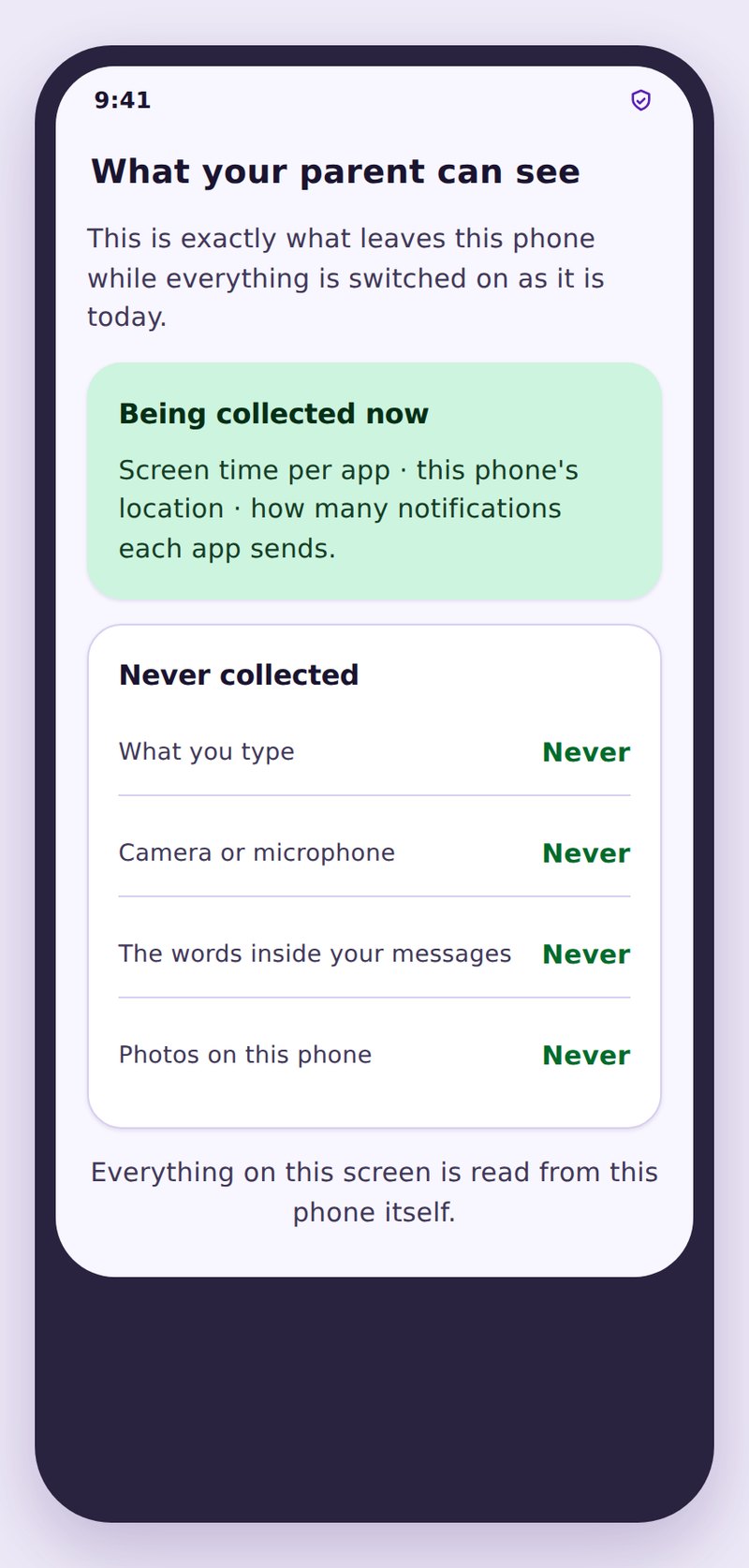
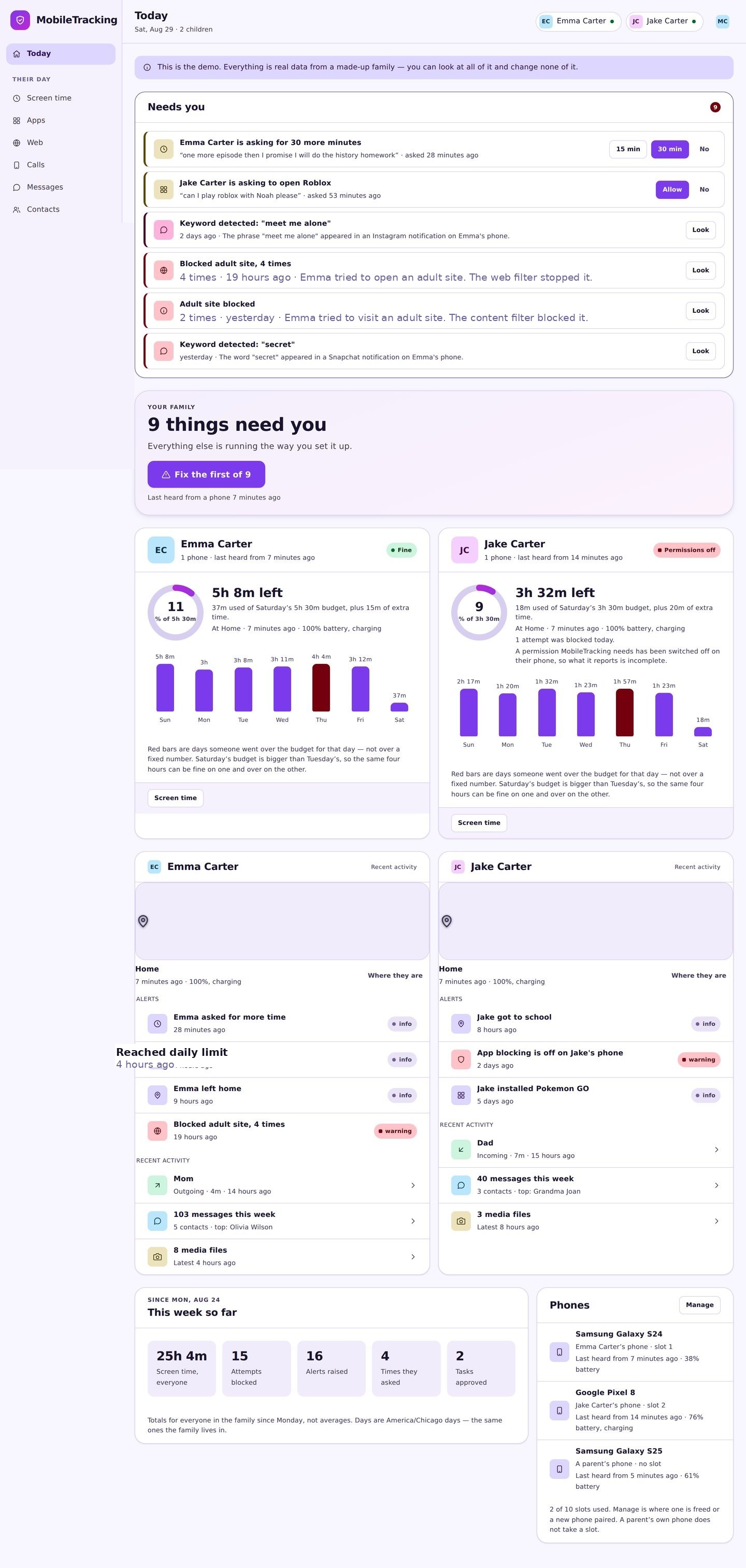
Vagueness breeds anxiety, so the more concretely you can describe the deal, the calmer your child will be. Tell them what the app actually does, in plain terms: perhaps it lets you see how much time they spend on apps, filters out adult websites, shows you roughly where they are for safety, and alerts you if certain worrying things come up. Then, just as importantly, tell them what you will not do: you will not sit reading every message they send their friends, you will not use it to check up on them constantly, and you will not go through it looking for things to tell them off about.
Setting those boundaries out loud does two things. It reassures your child that they still have a private life, which every growing person needs and deserves. And it holds you to account, because a promise made out loud is one you are more likely to keep, and keeping it is what earns you the trust that makes the whole arrangement work.
What this looks like at different ages
The conversation, and the monitoring itself, should shift as your child grows, and saying so is part of what makes it acceptable.
For younger children, roughly under ten, you barely need to justify it. Monitoring and controls are just a normal, expected part of having a device at this age, like stabilisers on a bike, and a simple “this helps keep you safe online” is plenty. Keep it light and unremarkable.
For tweens, around ten to thirteen, this is the key age to get the framing right, because they are starting to care a lot about privacy and independence. Be more explanatory, acknowledge that they are growing up, and stress the safety purpose and the limits. This is also the age to introduce the idea that the rules will loosen as they show they can handle more.
For teenagers, the emphasis shifts from control toward collaboration and coaching. Heavy-handed monitoring of an older teen tends to breed resentment and workarounds, so the conversation becomes more of a negotiation: more transparency in both directions, more of their input into the rules, and a clear, shrinking scope as they approach adulthood. The goal by the later teens is to be winding monitoring down, not ramping it up, because in a year or two they will be managing all of this alone and need to have practised.
Handling the pushback
Expect some resistance, it is normal and healthy, and how you handle it matters. “Don’t you trust me?” is the classic line, and it deserves a real answer, not a defensive one. The honest reply is that this is not about trusting them; it is about the online world containing risks that even sensible, trustworthy people need help with, and that you would do the same for any child you love. You can add, truthfully, that the people you are protecting them from are strangers and scammers, not them.
“None of my friends have this” is the other common one, and it may or may not be true, but either way you can acknowledge the feeling without caving: different families do things differently, this is what your family has decided is sensible, and it is not a punishment. The thing to avoid is getting drawn into a debate you treat as winnable by argument. You are the parent making a considered safety decision, and while you will listen and adjust the details, the decision itself is yours to make. Calm, warm, and firm beats defensive every time.
Above all, keep coming back to the promise that carries the whole thing: that they can always come to you if something online worries them, and they will not be in trouble and they will not lose their phone as a punishment for telling you. That single reassurance does more to keep a child safe than any feature in any app.
Keep the conversation going
This is not a one-time speech; it is the start of an ongoing dialogue. Check in now and then about how it is going, be willing to loosen a restriction when your child has shown they can handle more, and be honest if you ever do look at something and why. Every time you keep a promise, every time you loosen the reins as agreed, you deposit a little trust, and that trust is what makes an older child actually come to you when it counts. Monitoring your child’s phone works best not as a wall you put up once, but as a relationship you tend over years, and the first honest conversation is where that relationship starts.
What MobileTracking adds
MobileTracking is built for exactly this transparent approach. It is designed to be visible on the child’s phone, not hidden, so the whole arrangement stays out in the open, and it focuses on safety signals, screen-time limits, content filtering, location for safety, and alerts, rather than laying every private message bare. That makes it far easier to have the honest conversation this article describes, because what the app does matches what you can comfortably tell your child it does. Set it up together, explain it plainly, and it becomes a shared safety tool rather than something you have to keep quiet about.
Frequently asked questions
Should I tell my child I’m monitoring their phone?
In almost all cases, yes. Open monitoring protects the trust that actually keeps a child safe and keeps them willing to come to you when something goes wrong. Secret monitoring, once discovered, damages that trust and teaches a child to hide their real activity, which defeats the purpose. Transparency is both the ethical and the more effective choice.
What if my child gets angry when I tell them?
Some resistance is normal and healthy. Stay calm, warm and firm, lead with the safety reason rather than getting defensive, and acknowledge their feelings without treating the decision as up for debate. Keep returning to the key promise: they can always come to you if something worries them, without being punished or losing their phone. The initial grumble usually passes quickly.
Isn’t it my right to monitor secretly if I’m the parent?
For a younger child, the law often allows it, but “can” and “should” are different questions. Secret monitoring tends to backfire by destroying trust and pushing your child’s real activity out of sight. Open monitoring is more effective and better for your relationship. A narrow, serious, specific safety fear about an older child is the rare exception, and even then it should be short-term with a plan to move toward openness.
At what age should I stop monitoring my child’s phone?
There is no fixed age, but the scope should shrink steadily through the teens, shifting from control toward coaching, and be largely wound down by the time your child approaches adulthood. At 18 they are legally an adult, and monitoring without consent is no longer a parental right. The aim is to hand over judgement gradually, so they have practised managing it before they are fully on their own.
How do I explain monitoring to a teenager without a fight?
Treat it as a collaboration rather than a control measure. Be transparent about what the app does and does not do, invite their input into the rules, acknowledge that they are growing up, and make clear the monitoring will loosen as they show they can handle more. Framing it as a shrinking, shared safety arrangement, not surveillance, is what keeps an older teen on side.
Keep going
Read our guides on transparent monitoring for families, is it legal to monitor your child’s phone, and creating a family media agreement. For trusted guidance beyond this site, Common Sense Media is a well-regarded resource for parents: Common Sense Media.