“When should I get my child a phone?” might be the most-asked question in modern parenting, and it is asked with a particular kind of anxiety, because the first phone age feels like a decision you can only get wrong. Give it too early and you have handed a child the entire internet before they can handle it. Give it too late and, so the fear goes, they are the odd one out, left off the group chat, socially stranded. Both fears are real, and neither should make the decision for you.
The honest answer is that there is no magic number. The right age depends far less on a birthday than on the individual child, your family’s circumstances, and, crucially, what you actually mean by “a phone”, because that word covers everything from a basic call-and-text handset to a pocket supercomputer with unfiltered access to the whole internet. This guide will help you think it through properly, separate the pressures from the genuine considerations, and, wherever you land, set the thing up so it works for your family.
Why there is no single right age
It is tempting to want an authority to just tell you: “eleven”, or “high school”, or “not before fourteen”. Plenty of campaigns and experts offer numbers, and they are worth listening to, but the reason they disagree is that the honest answer genuinely varies. A mature, responsible ten-year-old who walks home alone and needs to reach you may be better suited to a phone than an impulsive thirteen-year-old who loses everything and struggles with limits. Age is a rough proxy for what actually matters, which is readiness and need, and it is a fairly loose one.
So rather than hunting for the number, it is more useful to ask two better questions. Does my child actually need a phone, and for what? And is my child ready to handle one responsibly? Those two questions, need and readiness, will get you to a better decision than any chart.
The two forces pulling on the decision
Two genuine pressures push toward getting a phone, and it helps to name them honestly rather than pretend they do not exist.
The first is practical need, and it is real. A child who starts walking to school alone, travelling on public transport, or staying late for activities has a genuine safety reason to be contactable, and so do you. Being able to reach each other is a legitimate, sensible motivation, and it is often the point at which a phone starts to make real sense.
The second is social pressure, which is equally real and much trickier. As children move through the last years of primary school and into secondary, friendship groups increasingly organise themselves through group chats and social apps, and a child without a phone can genuinely feel, and sometimes be, left out. “Everyone else has one” is often not much of an exaggeration, and dismissing it entirely misreads how much of a child’s social life now runs through these channels.
Pulling the other way is what a smartphone opens the door to: unfiltered internet and social media before a child is ready, the well-documented links between heavy social media use and anxiety and sleep problems in young people, the way a phone can swallow the time that used to go to play, homework, and sleep, and simply one more complex thing to supervise. Neither side is silly. The decision is a real weighing-up, not an obvious call, which is exactly why it feels hard.
The question that dissolves a lot of the difficulty: what kind of phone?
Here is the reframe that helps most families, and it is the thing the “what age” question usually misses. “Getting a phone” is not one decision, because there is a whole ladder of options between nothing and a full smartphone, and choosing the right rung for your child’s age solves much of the problem.
At the simplest end are basic phones, sometimes called “dumb phones”, that do calls and texts and little else. For a younger child whose real need is just to be reachable walking home, this meets the entire practical case with almost none of the risk. Then there are smartwatches designed for children, which let a child call and message approved contacts, and let you see their location, without an open internet in their pocket, a great fit for the “I need to reach them” stage. Next come heavily-managed smartphones, a real smartphone but locked down with parental controls, limited apps, filtering, and time limits, which suits a tween who needs more than calls but is not ready for the full thing. And finally the full smartphone with gradually loosening controls, appropriate for older teens as they earn more independence.
Seen this way, the decision softens. You are not choosing between “protected child with no phone” and “child with unlimited internet”. You are choosing which rung of the ladder fits right now, and planning to move up it as your child grows. A basic phone or a kids’ smartwatch at nine or ten, stepping up to a managed smartphone in the early teens, is a very reasonable path, and it lets you say yes to the genuine need without saying yes to everything at once.
Is your child actually ready? An honest checklist
Once you have separated need from age and considered the ladder, readiness is the other half. It is less about how old your child is and more about how they behave, and these questions are worth sitting with honestly.
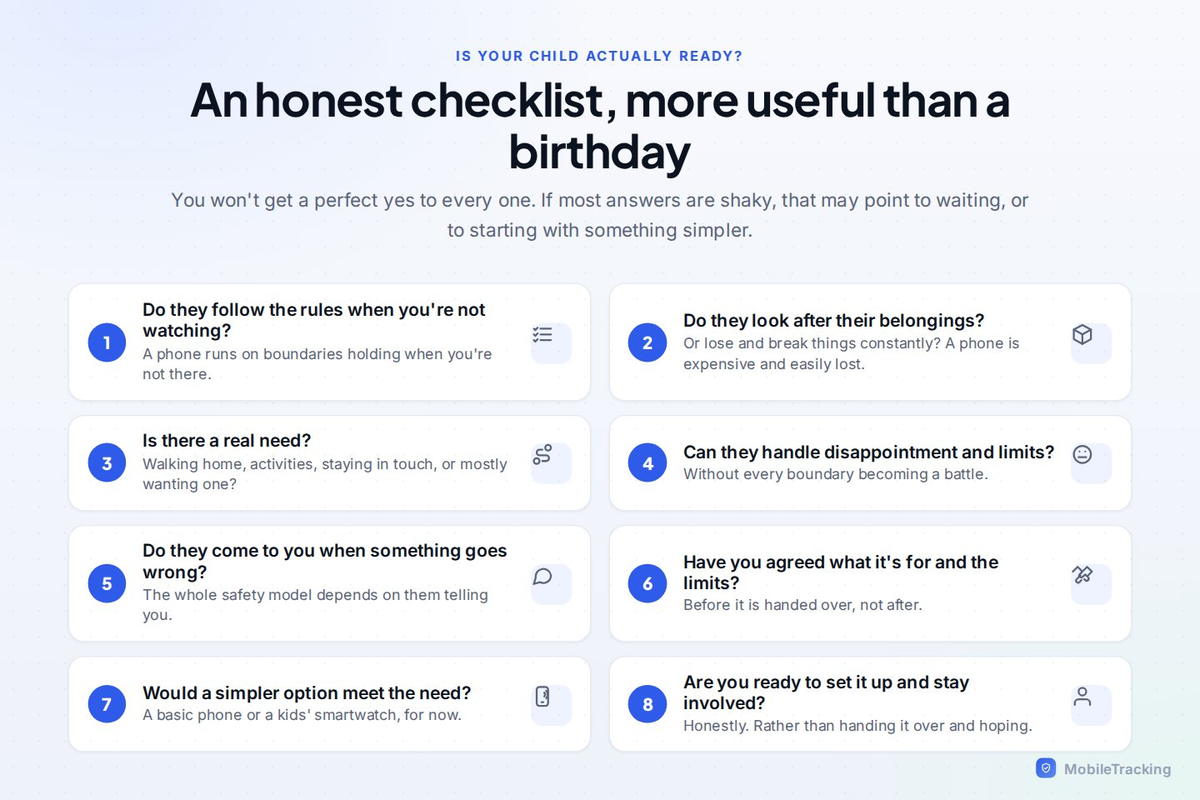
Do they generally follow the rules you set, even when you are not watching? A phone runs on trust that boundaries hold when you are not there. Do they take care of their belongings, or lose and break things constantly? A phone is expensive and easily lost. Is there a real need, walking home, activities, staying in touch, or is it mostly about wanting one? Can they handle disappointment and boundaries without every limit becoming a battle, since a phone will involve plenty of both? Are they able to come and talk to you when something goes wrong, or do they tend to hide things, because the whole safety model depends on them telling you? Have you agreed what the phone is for and what the limits will be? Would a simpler option, a basic phone or a smartwatch, actually meet the real need? And are you, honestly, ready to set it up properly and stay involved, rather than handing it over and hoping?
You are unlikely to get a perfect yes to every one, and you do not need to. But if most of the answers are shaky, that is useful information: it may point to waiting a little longer, or to starting further down the ladder with something simpler.
If the answer is “not yet”
Deciding your child is not ready is a completely legitimate choice, but “no” lands far better when it comes with a plan and a bit of empathy rather than a flat refusal. Acknowledge the social pressure honestly, because it is real to them, and telling a child their feelings about being left out are silly just teaches them not to talk to you. Offer an alternative that meets the underlying need: a smartwatch or basic phone covers the “I need to reach you” case without the smartphone, and often takes most of the social sting out too.
Most usefully, give them a path. “Not yet, and here’s roughly when, and here’s what we’d both want to see first” is a world away from a door that just stays shut. A child who knows what they are working toward, and that it is genuinely coming, can handle waiting far better than one who feels arbitrarily denied. And it is worth remembering you are not alone in this; talking to the parents of your child’s friends can turn “everyone has one” into a shared, saner approach, and sometimes into a group of families who decide to wait together.
If the answer is “yes”: start as you mean to go on
If you decide it is time, the setup is where you either build good habits or store up trouble, and the day the phone arrives is the moment you have the most leverage you will ever have. Use it.
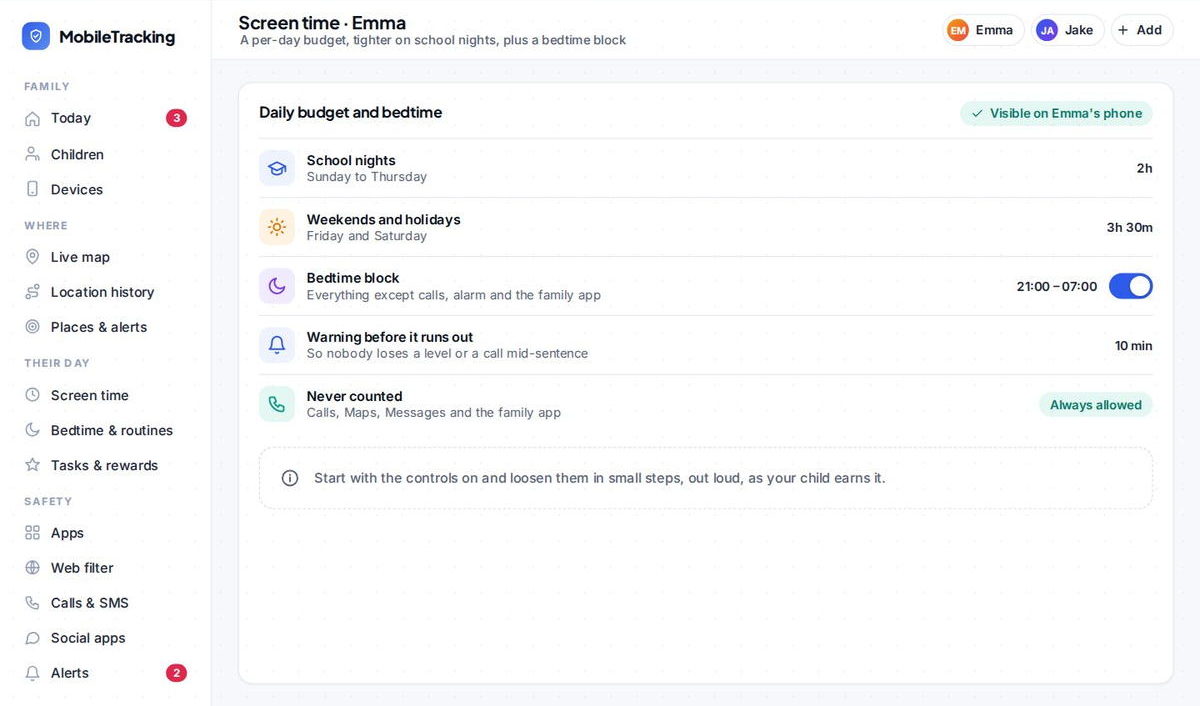
Set the phone up properly before you hand it over, with age-appropriate parental controls, content filtering, and time limits already in place, because it is far easier to loosen rules over time than to impose them on a phone your child already treats as unrestricted. Agree the ground rules together and, for many families, write them down: where the phone lives overnight (outside the bedroom is the single highest-value rule), when it goes away (meals, homework, the hour before bed), and what it is and is not for. Frame the controls honestly as a starter setup that grows with them, not a punishment or a sign you do not trust them, so the phone comes with a clear runway of increasing freedom as they show they can handle it.
Above all, have the conversations that a phone makes necessary, about who they talk to, what they share, being kind online, and coming to you if anything worries them, and keep having them. The phone is not a one-off decision you make and file away; it is the start of an ongoing, evolving negotiation that runs for years. Getting the first setup right, and keeping the door open, sets the tone for all of it.
In short
There is no perfect first phone age, and chasing one will only make you anxious. What there is instead is a better set of questions: does my child genuinely need one, are they ready to handle one, and what kind of phone actually fits where they are right now? Answer those honestly, use the ladder from smartwatch to managed smartphone rather than treating it as all-or-nothing, and, whenever you do say yes, set it up with care and keep talking. Do that, and you will have made the decision well, whatever number ends up on the candles.
MobileTracking’s part in this
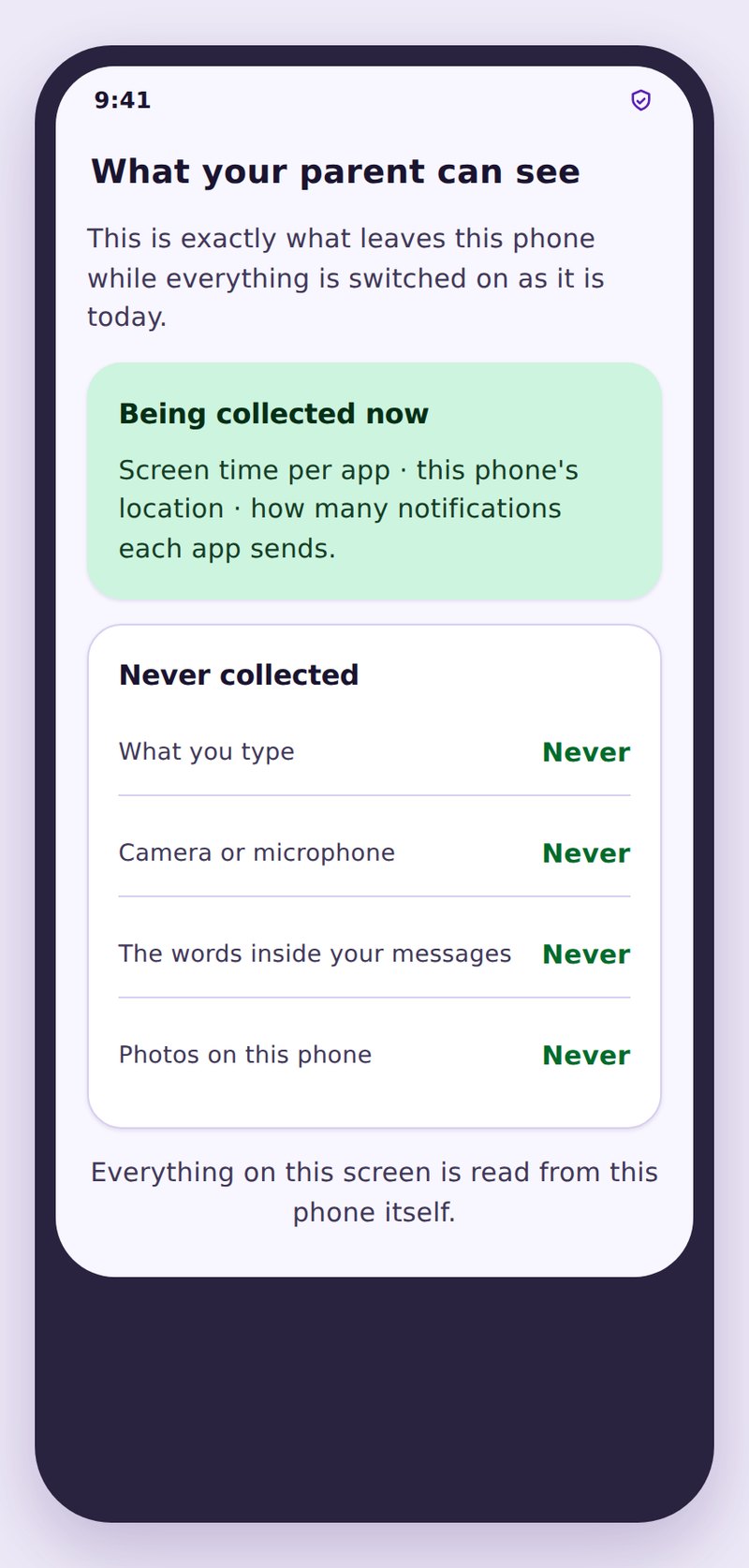
MobileTracking is built for exactly the “managed smartphone” stage, the point where a child is ready for more than a basic phone but not for the unfiltered version. It lets you set content filtering, app and screen-time limits, and a bedtime block, see where your child is, and get alerts that matter, all from a parent view, and to loosen those controls step by step as your child earns more independence. It is designed to be visible on the child’s phone, so the whole thing stays a shared, transparent arrangement rather than secret surveillance, which is exactly the tone you want to set with a first phone.
Frequently asked questions
What is the right first phone age?
There is no single right age; it depends on the individual child’s readiness, your family’s needs, and what kind of phone you mean. Many families start with a basic phone or a kids’ smartwatch around nine or ten for reachability, then move up to a managed smartphone in the early teens. Focus on need and readiness rather than a fixed number.
Should my child’s first phone be a smartphone?
Not necessarily. If the real need is just being able to reach each other, a basic call-and-text phone or a children’s smartwatch meets it with far less risk. A full smartphone, even a locked-down one, is a bigger step best taken when your child genuinely needs more and has shown they are ready to handle it.
How do I know if my child is ready for a phone?
Look at behaviour more than age: do they follow rules when you are not watching, take care of their things, handle disappointment without every limit becoming a fight, and come to you when something goes wrong? Is there a real need, and are you ready to set it up and stay involved? Shaky answers suggest waiting or starting simpler.
What do I do about the “everyone else has one” pressure?
Take it seriously rather than dismissing it, since a lot of children’s social life now runs through phones. Offer an alternative that meets the need, like a smartwatch, give a clear path to a fuller phone later, and talk to other parents, “everyone has one” often shrinks when families compare notes and some decide to wait together.
What should I set up before handing over the first phone?
Put age-appropriate parental controls, content filtering, and time limits in place before you give it over; it is far easier than adding them later. Agree the ground rules together, especially the phone living outside the bedroom overnight, frame the controls as a setup that grows with them, and start the ongoing conversations about who they talk to and coming to you if anything worries them.
Keep going
Read our guides on setting up parental controls on Android, setting up parental controls on iPhone, and how much screen time is healthy by age. For trusted guidance beyond this site, HealthyChildren.org from the American Academy of Pediatrics is a well-regarded resource for parents: HealthyChildren.org.