Knowing where your child is has always been part of parenting. A generation ago it meant a phone call to a friend’s house and a rough sense of when they were due home. Today it can mean a dot on a map that tells you, in real time, that they arrived at school, left football practice, or are on the bus home. Location tracking is one of the most reassuring things a phone can do for a worried parent, and also one of the most easily misused, and getting the balance right, between genuine safety and respecting a growing child’s autonomy, is what this guide is about.
We will cover how phone location actually works (it is worth understanding, because it explains the quirks), what geofencing and place alerts are and why they are often more useful than constant checking, the honest limits of the technology, and, most importantly, how to use all of it in a way that builds trust rather than eroding it. Because the truth about location tracking is that the technology is the easy part; how you use it is what matters.
How phone location actually works
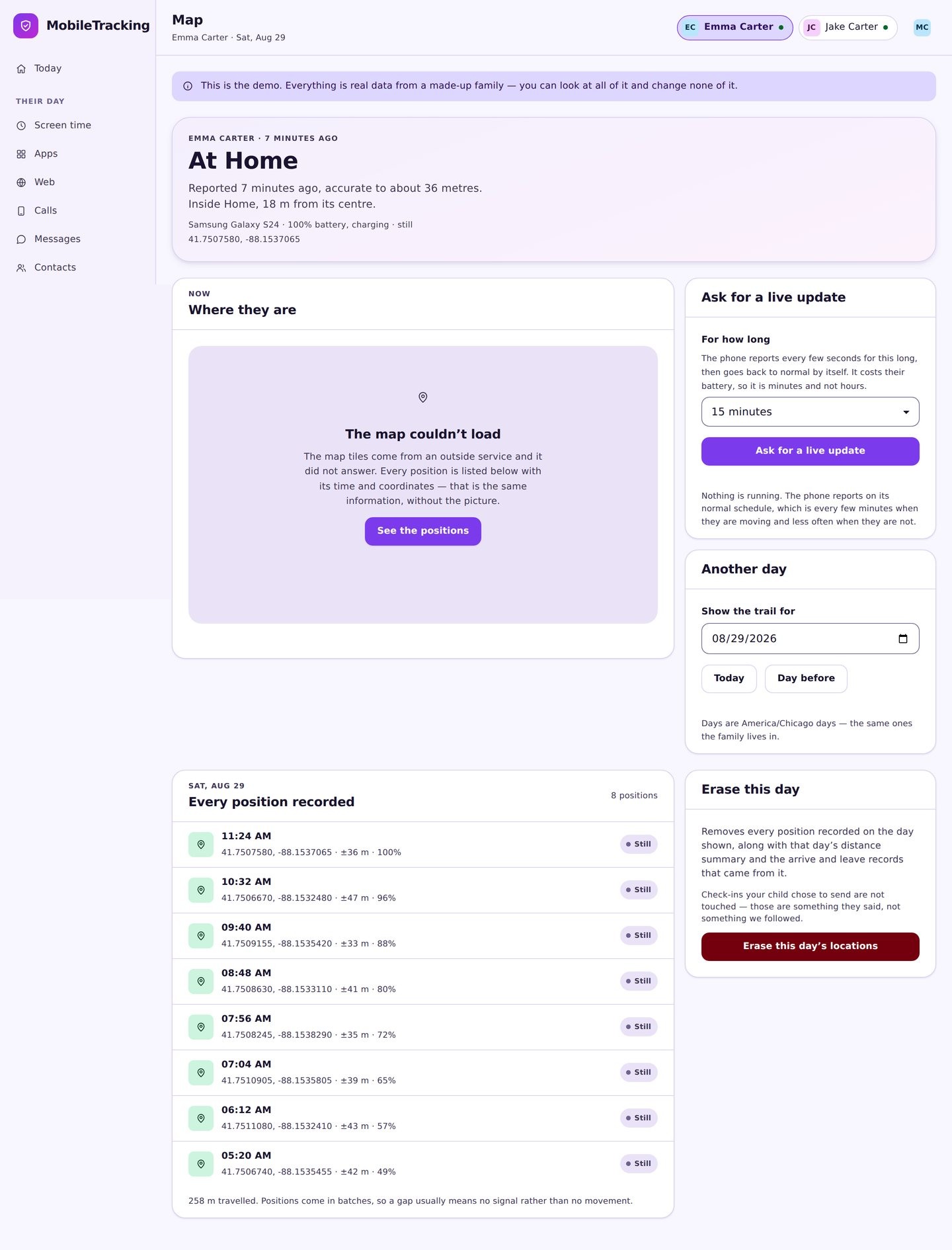
A little understanding here saves a lot of confusion later, especially when the dot on the map does something odd. Your child’s phone works out where it is by combining several sources rather than relying on any single one. GPS (and the equivalent satellite systems) gives a good, fairly precise fix outdoors, using signals from satellites, which is why location is most accurate under open sky and less so indoors or among tall buildings. Wi-Fi networks the phone can see are matched against a huge database of known networks to estimate position, which is what gives you a usable location indoors where GPS struggles. Mobile masts provide a rougher fix based on which cell towers the phone is near. And modern phones blend all of these together to produce the single best estimate they can.
This blending explains the behaviour parents find puzzling. Location can be pinpoint-accurate one moment and show your child a street away the next, because indoors the phone is leaning on Wi-Fi and masts rather than satellites. It can lag, showing an old position, when the phone has been still or has poor signal. And it drains battery, because keeping GPS and radios active is power-hungry, which is why an always-on tracker can noticeably shorten a phone’s day. None of this is a fault; it is the nature of how the technology works, and knowing it stops you from panicking when the dot jumps or reading too much into a temporary blip.
Live location versus place alerts
There are two quite different ways to use location, and understanding the distinction changes how you use it for the better.
The first is live location: opening a map and seeing where your child’s phone is right now. This is useful in specific moments, checking they have arrived somewhere, coordinating a pick-up, reassurance when they are late, but it invites a habit that is worth resisting, which is compulsively checking the map. Constant live-checking is where location tracking tips from safety into surveillance, and it tends to make both parent and child more anxious, not less.
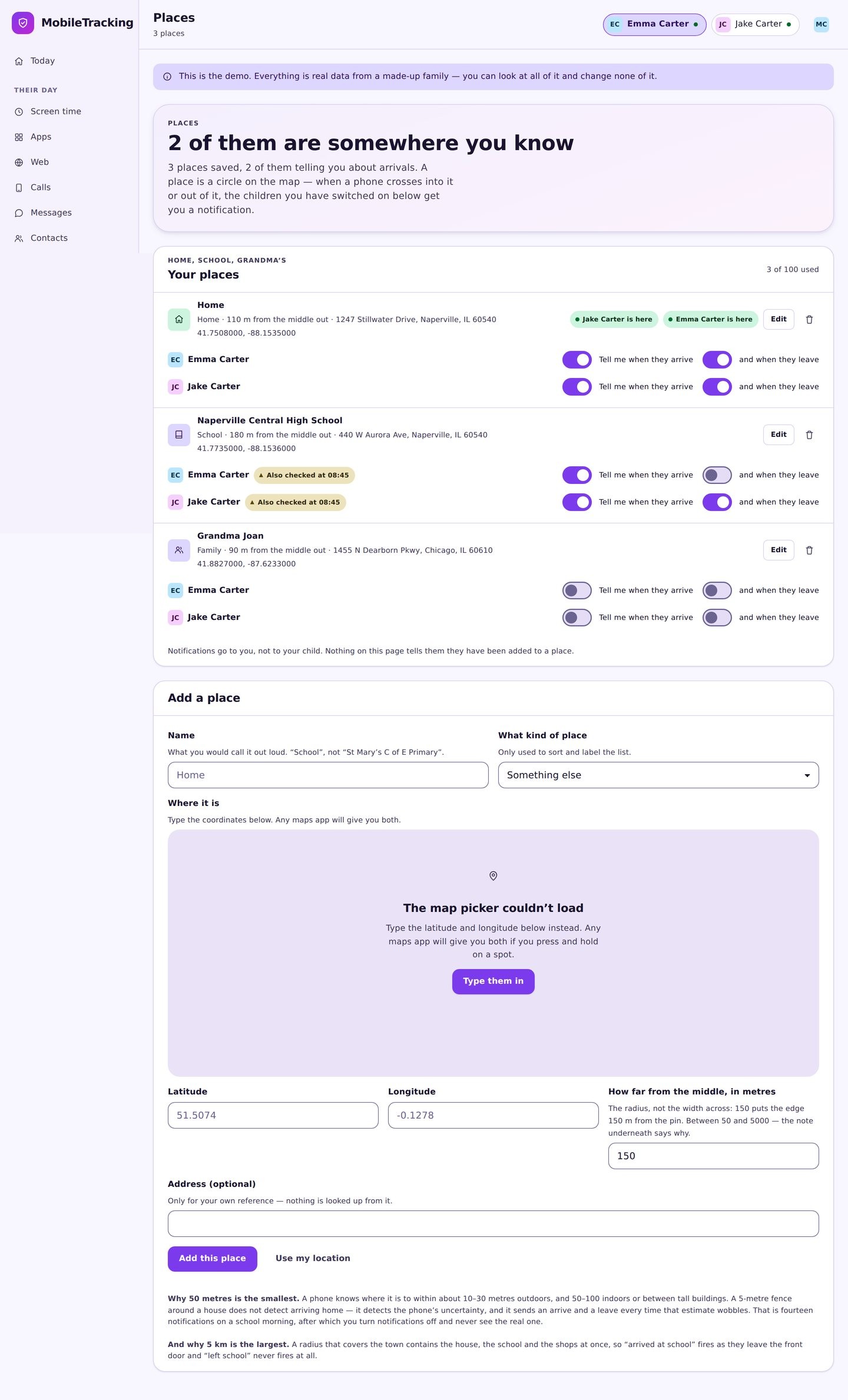
The second, and often more useful, is geofencing, also called place alerts. A geofence is a virtual boundary you draw around a real place, home, school, a grandparent’s house, and the app notifies you when your child’s phone enters or leaves it. Instead of you watching a map, the phone tells you the things that actually matter: “arrived at school”, “left home”, “got to Grandma’s”. This is a far healthier model, because it delivers the genuine safety benefit, knowing your child got where they were going, without requiring you to hover over a map or your child to feel watched every minute. For most families, well-set-up place alerts do more good, with less friction, than live tracking ever will.
The honest limits of the technology
It is important to be realistic, because location tracking is often oversold and a parent who trusts it too completely can be caught out. Several limits are worth holding in mind.
The most fundamental is that you are tracking a phone, not a child. The map shows where the device is, which is only where your child is if they have it with them, switched on, and charged. A phone left at a friend’s house, out of battery, or deliberately left behind tells you nothing about where your child actually is. Accuracy varies, as we have seen, so the dot is a good estimate, not a certainty, and reading a precise street address into an indoor fix can mislead. Signal gaps mean location can go stale or unavailable in the countryside, on the Underground, or inside large buildings. And an older child can circumvent it, by turning off location, leaving the phone, or other means, which is worth knowing not to encourage paranoia but to keep your expectations honest: location tracking is a helpful tool, not an infallible tether, and it works best as one layer among others, including, above all, communication.
Using it well: the trust question
Here is the part that matters more than any feature, because location tracking done badly can quietly poison a relationship. The technology is neutral; whether it strengthens your child’s safety or erodes their trust depends entirely on how you use it, and the difference comes down to a few principles.
Be open about it. Secret tracking, if discovered, and it usually is, teaches your child that you spy on them, which damages trust far more than the location data could ever protect. Tell your child the tracking is there, how it works, and why, and where possible set it up together. Transparent tracking is both the ethical choice and the more effective one.
Use it for safety, not control. There is a world of difference between knowing your child arrived safely and monitoring their every movement to check up on them. The first is reassurance; the second is surveillance, and children feel the difference keenly. Resist the pull to use the map to catch them out or to hover, and let place alerts do the work rather than constant live-checking.
Let it loosen as they grow. A degree of location awareness that is completely reasonable for a ten-year-old walking to school alone becomes intrusive for a sixteen-year-old, and holding on too tightly for too long breeds exactly the secrecy and resentment you want to avoid. Plan to wind it down as your child earns more independence, and be willing to talk about it rather than imposing it indefinitely.
When location tracking genuinely earns its place
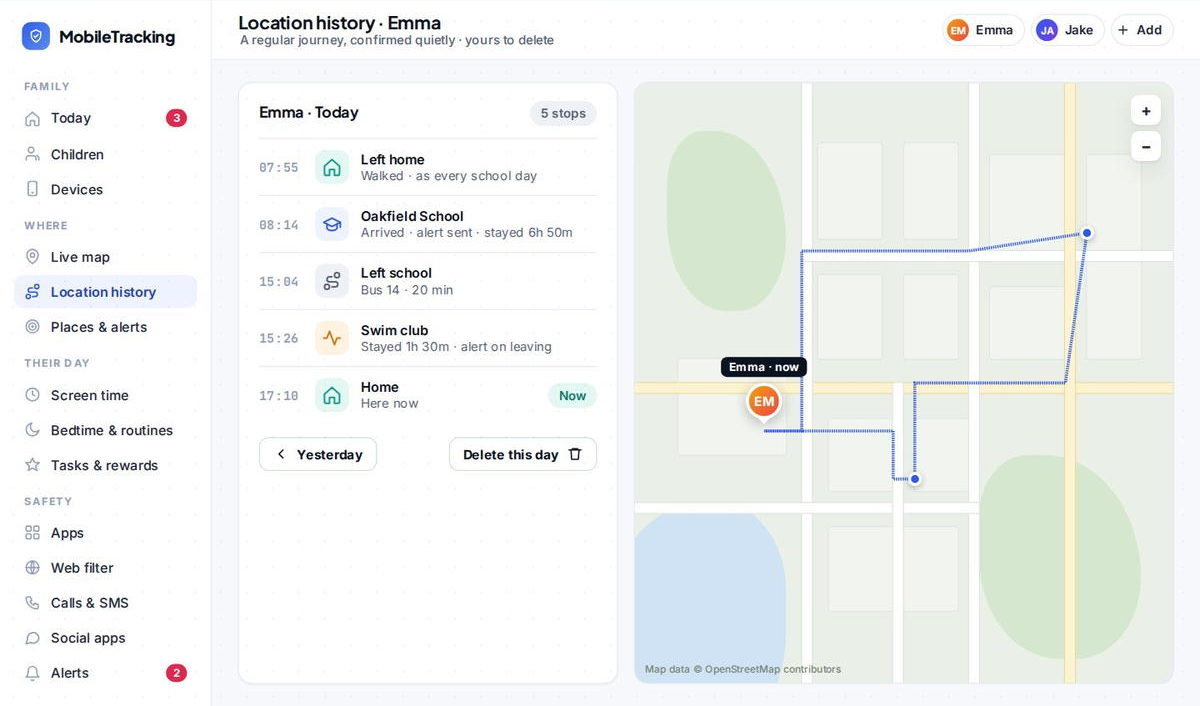
It helps to be concrete about where this technology actually pays off, because the honest answer is that its value is in specific, ordinary moments rather than in constant watching. The clearest case is the independent journey: a child who has started walking or taking the bus to school alone, and a place alert that quietly confirms they arrived. That single notification replaces a nagging low-level worry with a fact, and it does so without a phone call or a hovering parent. The same applies to after-school activities and changing plans, the practice that runs late, the friend’s house they went to instead, the logistics that fill family life, where knowing where things stand makes coordination easier for everyone.
Then there are the genuine emergencies, rare but real, where being able to locate a child quickly matters: a child who has not come home when expected, who is lost, or who is in a situation where minutes count. It is precisely because these moments are rare that a low-key, agreed location arrangement is worth having in the background, not as something you use daily, but as something you are glad exists on the day you need it. Framing tracking this way, as a tool for the specific moments that warrant it rather than a habit of constant checking, is what keeps it proportionate and keeps your child comfortable with it.
Battery and keeping it practical
A practical footnote that trips families up: location tracking uses battery, and a flat phone tracks nothing. If an always-on tracker is draining your child’s phone by mid-afternoon, the tracking becomes self-defeating, because the dead battery leaves you with less information than you started with, not more. The fixes are sensible ones: rely on place alerts, which are lighter than continuous live tracking, rather than watching the map all day; make sure your child knows to keep their phone charged, and consider a small portable charger for long days; and accept that occasional gaps, on the train, in a basement, when the battery dies, are normal rather than signs something is wrong. Treating location as a helpful background layer, not a lifeline you depend on minute to minute, is both more realistic and less stressful for everyone.
A note on consent and older teens
The trust principle has a hard edge worth stating plainly: as your child approaches adulthood, location tracking without their agreement stops being reasonable, and at 18 they are legally an adult for whom tracking without consent is no longer a parental right at all. Long before that, the balance should be tipping toward their autonomy. The healthiest arc is one where tracking is normal and openly agreed when they are young, discussed and scaled back through the teens, and largely handed over to their own judgement by the time they are nearly grown, so that it never becomes the thing they resent and evade. Location sharing among older teens and their parents works best when it is mutual and consensual, more like the way adults share location with family for convenience and safety, than a one-way watch imposed from above.
A realistic verdict
Location tracking is one of the genuinely reassuring things a phone offers a parent, and used well, it is a real safety benefit, knowing your child got to school, being able to find them if plans go wrong, coordinating the ordinary logistics of family life. The key is to understand what it can and cannot do (it tracks a phone, imperfectly, not a child), to lean on place alerts rather than compulsive map-watching, and above all to use it openly, for safety rather than control, and to loosen it as your child grows. Get that balance right and location becomes a quiet background reassurance that both you and your child are comfortable with, rather than a source of conflict or a false sense of security.
Using MobileTracking for this
MobileTracking includes the location features described here, designed to be used the healthy way. You get a live map when you genuinely need it, but the emphasis is on place alerts, geofences around home, school, and other regular places that notify you on arrival and departure, so you get the reassurance without hovering. It is built to be visible on the child’s phone, so location sharing stays a transparent, agreed arrangement rather than secret tracking, and it sits alongside screen-time and safety features in a single parent view. The aim is exactly the balance this guide describes: real safety benefit, used openly, for reassurance rather than surveillance.
Frequently asked questions
How does phone location tracking actually work?
A phone estimates its position by blending several sources: GPS satellites (accurate outdoors), nearby Wi-Fi networks matched against a database (which helps indoors), and mobile masts (a rougher fix). This blending is why location is precise under open sky but can be a street off indoors, and why keeping it always on drains battery. The dot is a good estimate, not a guaranteed pinpoint.
What is geofencing, or a place alert?
Geofencing draws a virtual boundary around a real place, home, school, a relative’s house, and notifies you when your child’s phone enters or leaves it, for example “arrived at school” or “left practice”. It is often more useful and much healthier than live tracking, because it gives you the reassurance that your child got where they were going without you having to watch a map or your child feeling watched every minute.
Is location tracking accurate?
It is usually a good estimate rather than a certainty. Accuracy is best outdoors with a clear view of the sky and worse indoors or among tall buildings, where the phone relies on Wi-Fi and masts. Location can also lag or go stale with poor signal. Importantly, you are tracking a phone, not a child, so it only reflects your child’s location if they have the phone with them, on and charged.
Should I track my child’s location without telling them?
No, in almost all cases. Secret tracking, once discovered, damages trust far more than the data protects, and teaches your child to evade it. Be open: tell them it is there, how it works, and why, and set it up together where you can. Transparent tracking is both the ethical and the more effective choice, and it keeps location a source of reassurance rather than conflict.
At what age should I stop tracking my child’s location?
There is no fixed age, but the balance should tip toward their autonomy through the teens, with tracking discussed and scaled back rather than held at full strength. By the time they approach adulthood it should be largely handed to their own judgement, and at 18 they are legally an adult for whom tracking without consent is no longer a parental right. Mutual, consensual sharing works best with older teens.
Keep going
Read our guides on family location sharing between Android and iPhone, transparent monitoring for families, and what age a child should get their first phone. For trusted guidance beyond this site, Common Sense Media is a well-regarded resource for parents: Common Sense Media.