If you only ever fix one thing about your child’s phone use, make it this one. Not screen time in general, not which apps they have, not any of the more visible battles, but the phone in the bedroom at night. Of all the effects phones have on children, the effect on sleep is the best evidenced, the most damaging, and, happily, the most fixable of all the ways screens affect children. A tired child struggles at school, struggles with their mood, and struggles to cope with everything else, and a phone by the bed is one of the most common reasons children today are not sleeping enough.
This guide explains exactly how phones and sleep interact (it is more than the blue-light story you have probably heard), why sleep matters so much for a developing child, and the practical steps that actually work, starting with the single rule that does more than all the others combined. None of it requires a fight, and most of it is easier than the nightly negotiations you may be having now.
Why sleep matters more than almost anything
It is worth being clear about the stakes, because “get more sleep” can sound like nagging until you see what is riding on it. Sleep is not downtime for a child; it is when an enormous amount of the actual work of growing up happens. During sleep the brain consolidates learning and memory, which is why a tired child struggles to retain what they were taught. Sleep regulates mood and emotion, which is why an under-slept child is irritable, tearful, and quick to melt down. It supports physical growth, immune function, and concentration. And crucially, children and teenagers need substantially more of it than adults, roughly nine to eleven hours for primary-age children and eight to ten for teenagers, amounts that a phone by the bed quietly erodes.
The knock-on effects are the things parents worry about most, and often do not connect to sleep: poor concentration and slipping grades, anxiety and low mood, behavioural problems, even effects on appetite and weight. When a child is struggling in several of these areas at once, chronic under-sleeping is one of the first things worth looking at, and a phone in the bedroom is one of the most common causes.
How phones actually wreck sleep
The popular explanation is blue light, and it is part of the story, but it is not the biggest part, and treating it as the whole answer leads parents to buy blue-light filters and wonder why nothing improves. There are really four separate mechanisms at work.
The first is displacement, and this is the big one. Every minute spent scrolling in bed is a minute not spent asleep. A child who would have dropped off at half nine is instead awake at eleven because the feed is endless and the next video is always right there. This has nothing to do with light and everything to do with the phone simply stealing the hours, and it is the mechanism that does the most damage.
The second is stimulation. Engaging, exciting, or upsetting content, an intense game, a dramatic group chat, an argument in the comments, wakes the brain up and floods it with alertness at exactly the moment it should be winding down. A calm body cannot follow an agitated mind into sleep.
The third is anxiety and the fear of missing out. The pull to stay connected, to see the next message, to not be the one who missed what happened, keeps a child mentally switched on and reaching for the phone. A device on the nightstand that buzzes through the night is an open invitation to a fragmented, shallow sleep.
The fourth is blue light, which genuinely can suppress melatonin, the hormone that signals it is time to sleep, and delay the body clock. It is real, but it is the smallest of the four for most children, which is why the phone simply not being in the room beats any filter you can install.
The single most important rule
Here it is, and everything else is secondary to it: the phone charges outside the bedroom overnight.
That one rule handles all four mechanisms at once. It stops the phone stealing sleep hours, because there is nothing to scroll. It removes the late-night stimulation. It ends the buzzing notifications and the temptation to check. And it takes the screen out of the pre-sleep window entirely. No blue-light filter, no clever app, no amount of willpower asked of a tired child can match the simple fact of the device being in another room. If you do nothing else after reading this, set up a charging spot in the kitchen or hallway where all the family’s phones, ideally including the grown-ups’, spend the night.
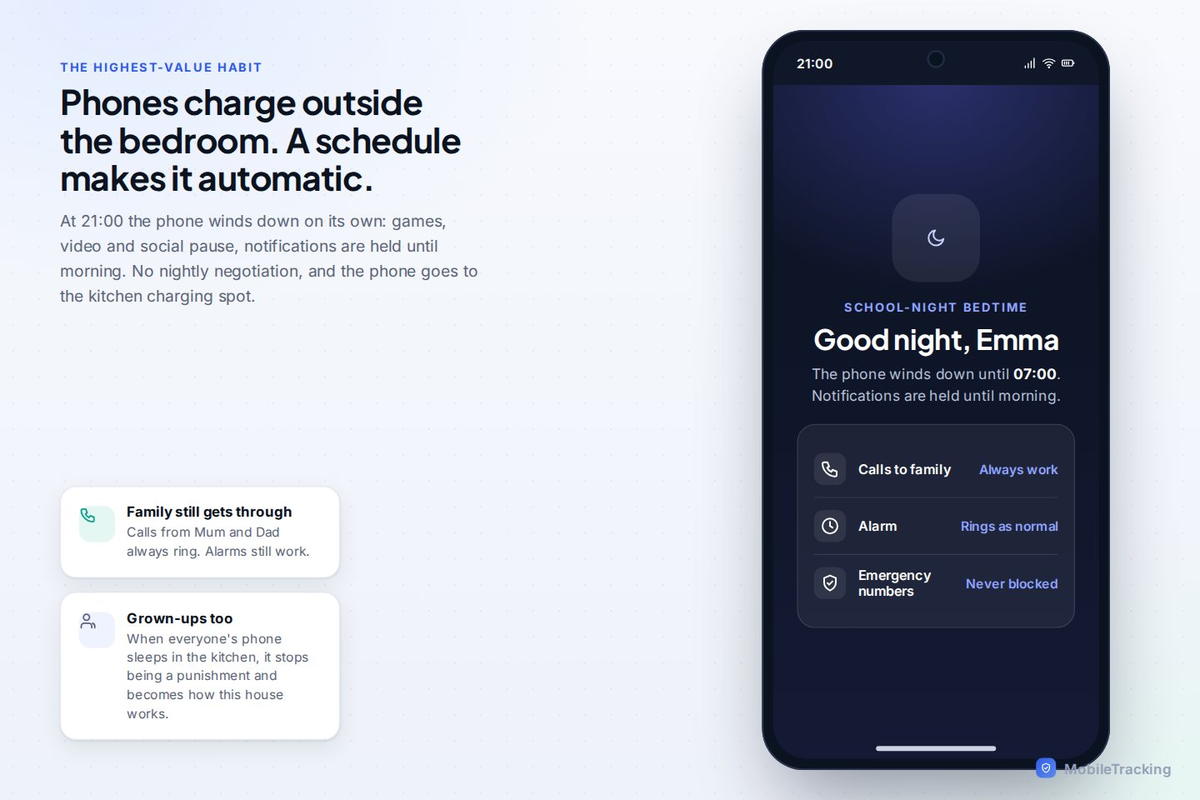
The reason to include the grown-ups is not just fairness, though children are quick to spot a rule that only applies to them. It is that a family charging station, where everyone’s phone sleeps in the kitchen, turns a rule imposed on a child into a household norm everyone shares, which is far easier to sustain and far less resented. It also happens to improve your sleep, which makes you a calmer parent, so everyone wins.
Build a wind-down routine
Beyond getting the phone out of the room, the hour before bed is where good sleep is won or lost. The aim is a buffer between screens and sleep, because a brain jolted by a phone one minute cannot settle the next.
A screen-free hour before bed is the target, even half an hour helps, filled with the calm, analogue things that signal sleep is coming: reading a real book, a bath, quiet talk, dim lights. Keep bedtimes reasonably consistent, including at weekends within reason, because a body clock that is yanked around by late weekend nights struggles all week. And protect the mornings too: a phone that is the first thing a child reaches for on waking pulls them straight back into the stimulation, so keeping it out of the bedroom helps both ends of the night.
If your child uses their phone as an alarm clock, and many do, that is easily solved: buy them a cheap standalone alarm clock. It removes the single most common excuse for the phone staying by the bed, and it is a small price for the sleep it buys back.
Using the phone’s own tools to help
The technology that causes the problem can also help enforce the solution, which is worth using. Both major phone platforms, and family apps, offer a downtime or bedtime schedule that automatically winds the device down at a set time each night, greying out most apps so that even a phone left in the room becomes far less tempting. Setting this up means the boundary is enforced by the phone itself rather than by you nagging, which reduces conflict and makes the rule feel less personal.
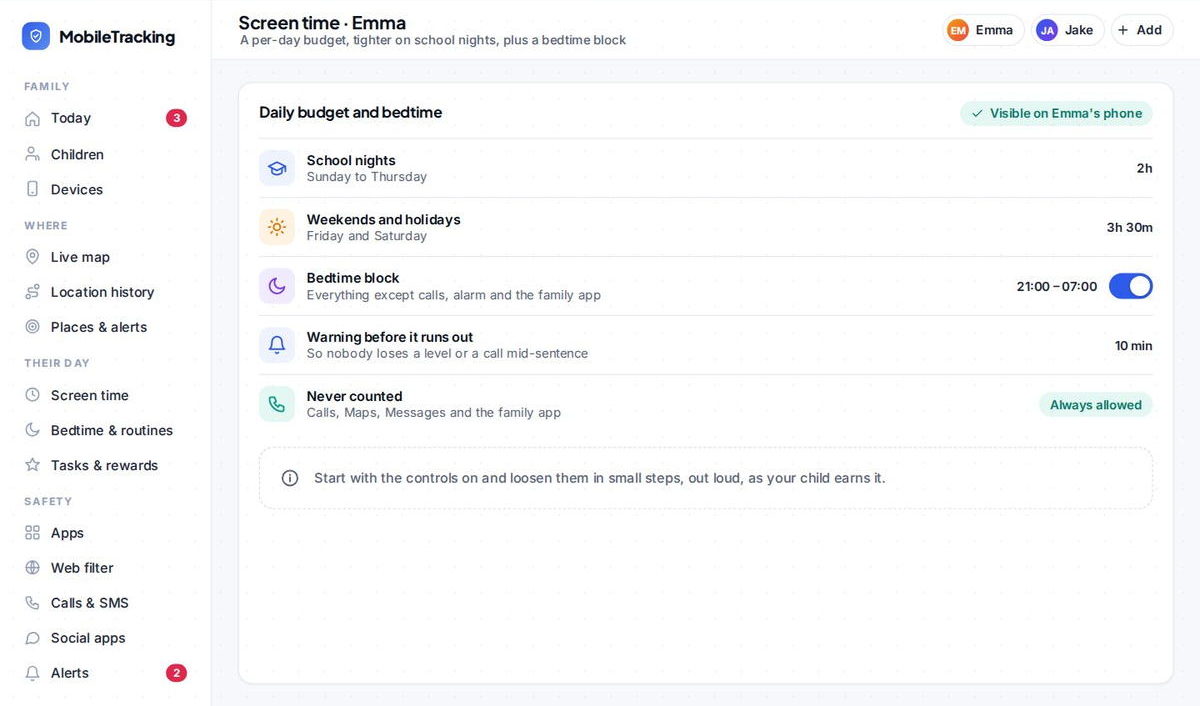
Combine a downtime schedule with a sensible daily screen-time budget and you have automated most of the structure, leaving you to focus on the routine and the relationship rather than policing the clock. The tools are a support, not a substitute for the bedroom rule, but they make that rule much easier to hold.
What good habits look like by age
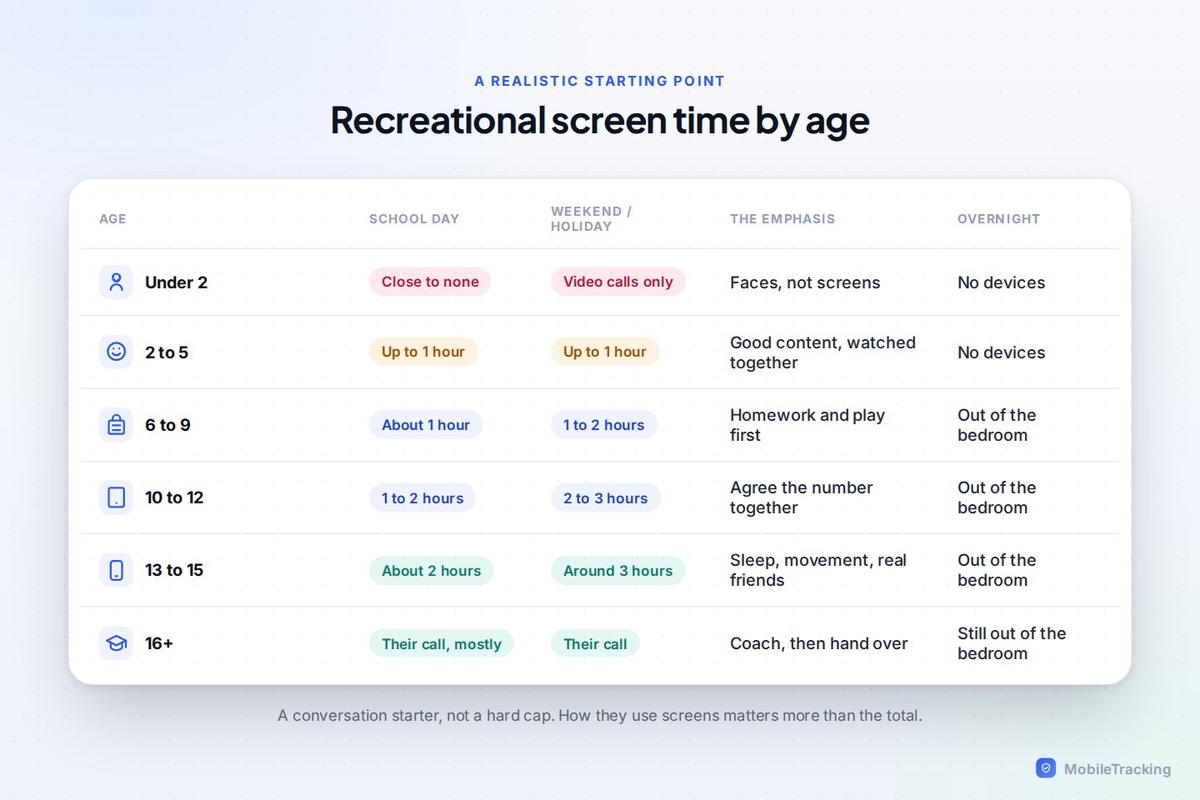
The bedroom rule holds at every age, but the details shift as children grow, and it helps to start early. For younger children, this is simple and barely negotiable: devices live outside the bedroom full stop, and the habit is set so young it never becomes a battle. A six-year-old who has never had a screen in their room does not miss it.
For tweens, often the age a first phone arrives, the day it is handed over is the moment to set the overnight rule as a given, part of how the phone works from the start. It is far easier to establish now than to claw back later, and it heads off the years of resistance that come from a phone that once lived on the nightstand.
For teenagers, expect more pushback and hold the line on the essentials while loosening elsewhere. You can give an older teen more daytime freedom and more say over their limits, but the overnight-charging rule is the one worth keeping firm on longest, because the sleep stakes only rise as school gets more demanding. Framing it as coaching, protecting a resource they will need to manage themselves soon, works better than treating it as control.
Handling the pushback
Older children especially will resist, and the objections are predictable, so it helps to have answers ready. “I use it as my alarm” is solved by a real alarm clock. “I need it to talk to my friends” is met by agreeing a reasonable cut-off time, after which conversations can wait until morning, which is true and good for everyone. “Everyone else has their phone at night” may or may not be accurate, but either way this is your family’s approach, framed around health rather than punishment.
The most effective framing is honesty about why: not “because I said so”, but “because sleep matters more than anything else your phone does, and this protects it”. Explaining the reason, and applying the rule to the whole family, turns it from an arbitrary imposition into something your child can understand even if they grumble. And it is worth saying plainly that adults find phones hard to put down at night too, because that honesty disarms the sense that they are being singled out as uniquely weak-willed.
Summing up
Of all the digital-parenting battles, this is the one with the clearest payoff and the simplest solution. The phone out of the bedroom overnight, a screen-free wind-down, a consistent bedtime, and a downtime schedule to make it automatic, and you have protected the single most important thing your child’s brain and body do each day. A well-slept child copes better with everything else, the friendships, the schoolwork, the moods, the other online risks, which means this one rule quietly makes every other part of parenting easier too.
Where a tool like MobileTracking helps
MobileTracking makes the sleep-protecting routine easy to hold. You can set a bedtime block that winds the phone down automatically each night, set a daily screen-time budget that is tighter on school nights, and see whether use is genuinely tailing off in the evenings or creeping later. Because your child can see the same schedule you set, it stays a shared, transparent arrangement rather than a nightly fight, which is exactly what makes a bedtime boundary actually last. It is a support for the single most valuable rule in digital parenting, the phone out of the bedroom overnight, not a replacement for it.
Frequently asked questions
Should my child’s phone be out of their bedroom at night?
Yes. This is the single highest-value rule in digital parenting. A phone in the bedroom steals sleep hours through scrolling, stimulates the brain before bed, invites night-time notification checks, and adds blue light. Charging it in another room overnight handles all of those at once, and no filter or app can match simply having the device out of reach.
Is blue light really the problem with phones and sleep?
It is part of it, but the smallest part for most children. Blue light can suppress melatonin and delay the body clock, but the bigger culprits are displacement (scrolling instead of sleeping), stimulation from engaging content, and the anxiety of staying connected. That is why blue-light filters help little on their own, and getting the phone out of the room helps enormously.
How much sleep does my child actually need?
Roughly nine to eleven hours for primary-age children and eight to ten for teenagers, more than most get. Under-sleeping shows up as poor concentration, slipping grades, irritability, anxiety, and behavioural problems, so if a child is struggling across several of those at once, chronic lack of sleep, often caused by a phone in the bedroom, is worth looking at first.
My child uses their phone as an alarm. What do I do?
Buy a cheap standalone alarm clock. Using the phone as an alarm is the most common reason it stays by the bed, and a separate clock removes the excuse entirely for a very small cost. It is one of the simplest, highest-return changes you can make to protect your child’s sleep.
How do I enforce a phone bedtime without a nightly fight?
Let the phone do it. Set a downtime or bedtime schedule (on the phone itself or a family app) that automatically winds the device down at a set time, so the boundary is enforced by the phone rather than by you nagging. Combine it with a family charging station where everyone’s phone, including the adults’, sleeps overnight, which turns a rule into a shared household norm.
Keep going
Read our guides on how much screen time is healthy by age, cutting screen time without a fight, and creating a family media agreement. For trusted guidance beyond this site, HealthyChildren.org from the American Academy of Pediatrics is a well-regarded resource for parents: HealthyChildren.org.