Every parent knows the scene. It’s 8:40 on a school night, you say “phone, now,” and what follows is either a negotiation worthy of a hostage situation or a slammed door. You win the battle, technically. You lose the evening. And tomorrow, having done nothing to reduce screen time, you get to do it all again.
Here’s the thing almost no one tells you: the nightly fight isn’t a discipline problem. It’s a design problem. Phones are built by teams of very clever people whose entire job is to make them hard to put down, and then we ask a twelve-year-old to beat that with willpower they don’t have yet. When you frame it that way, the solution stops being “be stricter” and starts being “change the setup so less screen time is the easy option.”
That’s what this guide is about. Seven tactics that genuinely reduce screen time, plus a realistic way to roll them out, all without turning your house into a nightly war zone. None of them rely on lectures, and none of them require you to be a tyrant.
Why grabbing the phone doesn’t reduce screen time
Confiscation feels like control, but it usually backfires for three reasons.
First, it’s a surprise, and surprises feel like punishment. A phone snatched out of a kid’s hands mid-conversation lands as an attack, and they respond in kind.
Second, it teaches nothing. The child learns “Mum takes my phone when she’s annoyed,” not “I need to manage my own time.” The moment you’re not there, the behaviour comes straight back.
Third, it makes you the enemy of the thing they love, which means every future conversation starts from a worse place. You want to be the person who helps them find balance, not the person who confiscates joy.
So put the confiscation reflex away. The tactics below work with your child’s psychology instead of against it.
1. Make the limit predictable, so it stops being personal
Most screen-time arguments aren’t really about the screen. They’re about the ambush.
Think about your own reaction if someone walked up and took your laptop mid-sentence with no warning. You’d be furious, and not because you can’t live without the laptop. It’s the suddenness. Kids feel exactly the same, except they have less impulse control to soften the reaction.
The fix is to make the limit boringly predictable. Same budget, same times, every day, visible to your child so they can see it coming. When the end of screen time arrives at a time everyone already knew about, it stops being something you’re doing to them and becomes just how the day is shaped. There’s nothing to rebel against, because there’s no surprise to react to.
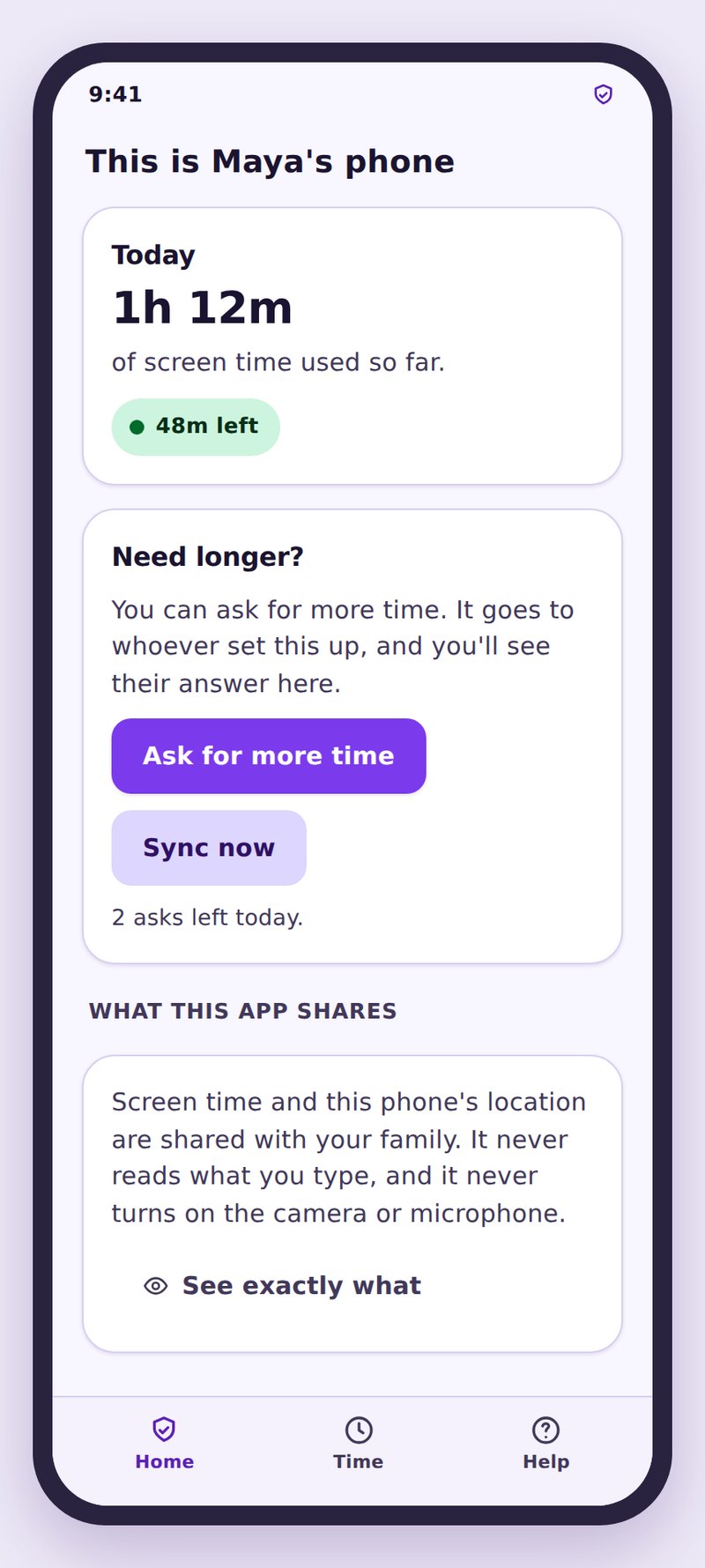
Practically, that means two things. Set a daily budget, and, this is the part parents skip, make sure your child can actually see how much they have left. A countdown they can check themselves does more to prevent the 8:40pm meltdown than any amount of firmness at 8:40.
2. Give them a legitimate way to earn more
Here’s where a lot of well-meaning setups fall apart: they’re too rigid.
Imagine the limit is two hours, full stop, no exceptions. Then one evening there’s a genuinely good reason for more, a group video call for a history project that’s due tomorrow, or the family is twenty minutes from the end of a film. If the answer is a flat “no, the limit is the limit,” you’ve just taught your child that the system is stupid and unfair, and that the smart move is to find ways around it rather than work within it.
Build in a pressure valve instead. Let your child ask for extra time, with a reason attached, and make it genuinely easy for them to ask and for you to answer.
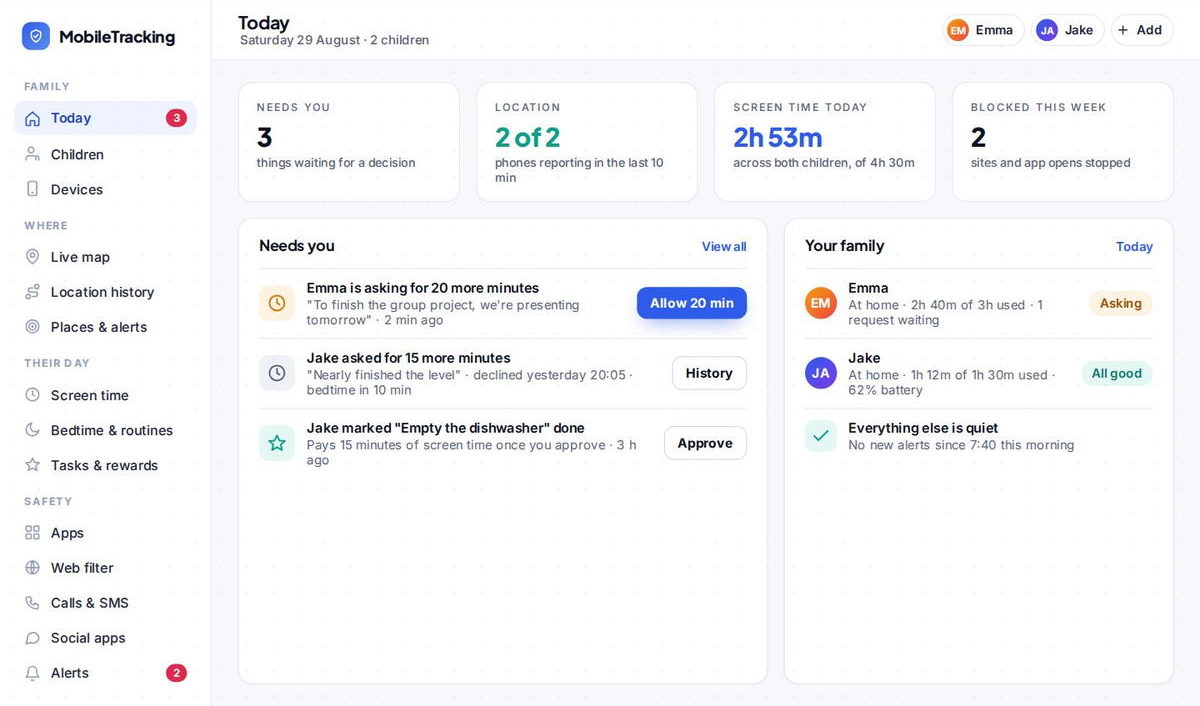
When you say yes quickly to a fair request, something important happens: you earn the credibility to say no to an unfair one. A kid who knows you’ll be reasonable about the history project is far more likely to accept “no, it’s a school night” when they just want to keep scrolling. You’ve turned the whole thing into a negotiation between two reasonable people, which is exactly what you want it to become as they get older.
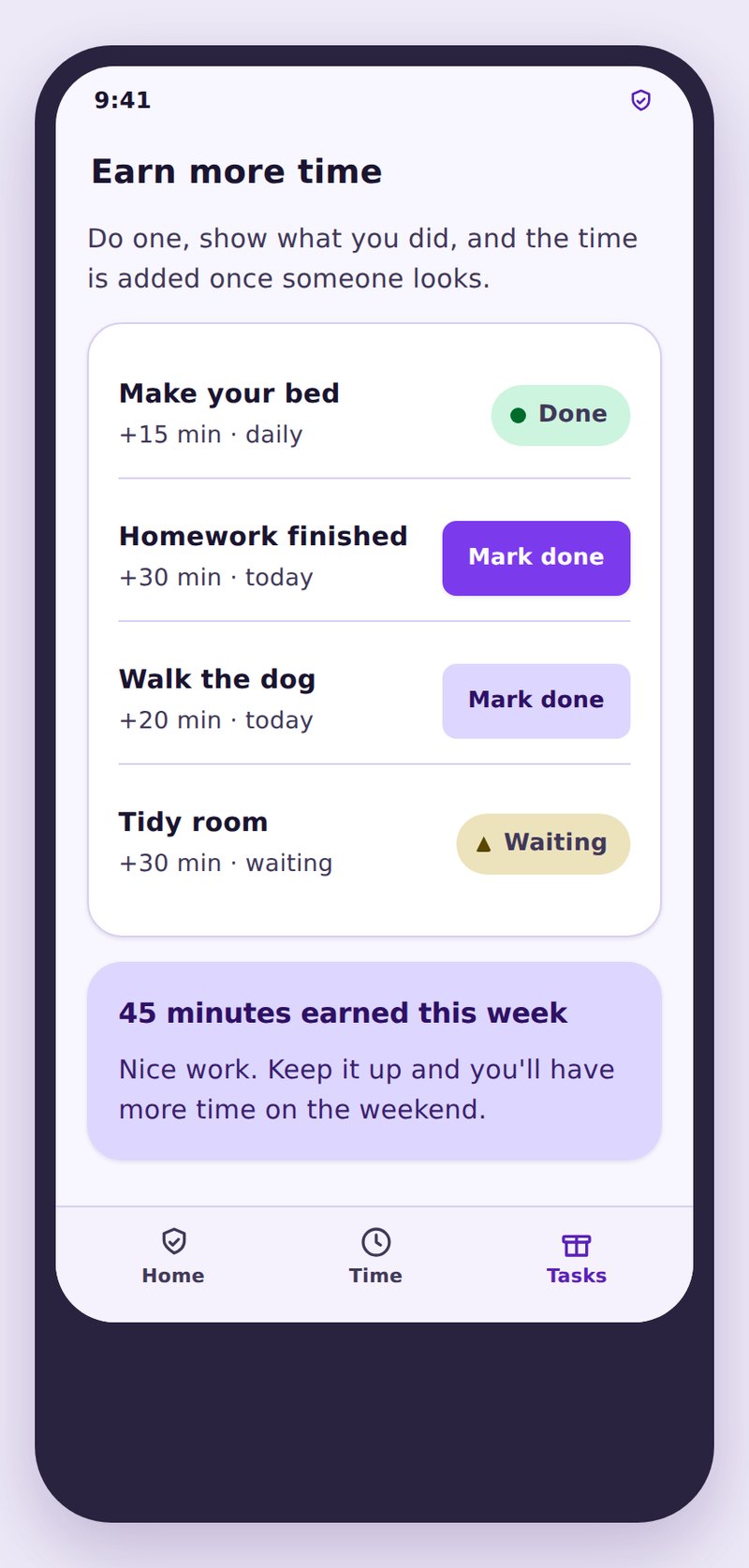
You can push this further by tying bonus minutes to effort, a finished chore, twenty minutes of reading, walking the dog. Now screen time isn’t just something you ration; it’s something they can earn, which shifts the emotional tone from “you’re taking things from me” to “I can control this.”
3. Protect the two hours that actually matter
You don’t have to fight about the whole day. If you look honestly at where screens do the most damage, it nearly always comes down to two windows: the hour before bed, and homework time.
The bedtime hour is the big one. Screens before sleep wreck sleep, the light, the stimulation, the “just one more video”, and poor sleep makes everything else about a teenager harder: mood, focus, appetite, the lot. So ring-fence it. Set a wind-down time where games and video stop and notifications are held until morning, so the phone isn’t buzzing on the nightstand at 1am. Alarms and the ability to call you still work, because a bedtime rule should never make a phone useless in a real emergency.
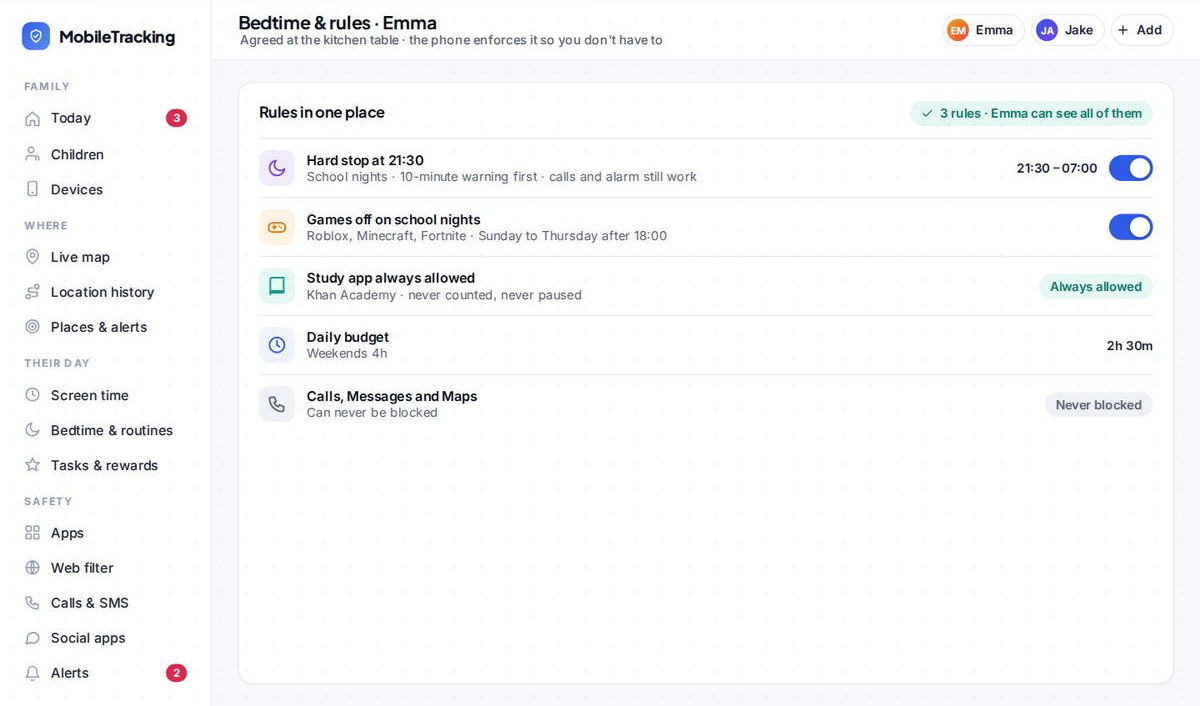
Homework time is the second window. A phone within reach during study is a focus tax, every buzz is a small interruption that costs far more than the few seconds it seems to. Pausing the distracting apps during homework hours protects the thing you actually care about, which is that the work gets done and gets done well.
Leave the rest of the day looser. When you’re only defending two specific windows instead of policing every minute, your child doesn’t feel like they’ve lost everything, and you’ll meet a fraction of the resistance.
4. Go after the apps, not the total number
“Three hours of screen time” is a number that tells you almost nothing.
Three hours split across a video call with a grandparent, a homework app, a music playlist and twenty minutes of a game is a fairly healthy day. Three hours of nothing but short-form video, thumb flicking upward, is a different animal entirely. Same total, completely different effect on your kid.
This is why blanket limits often feel unfair to a teenager, because they usually are. They lump the good in with the bad. The smarter move is to look at where the time actually goes and target the one or two apps doing the real damage.
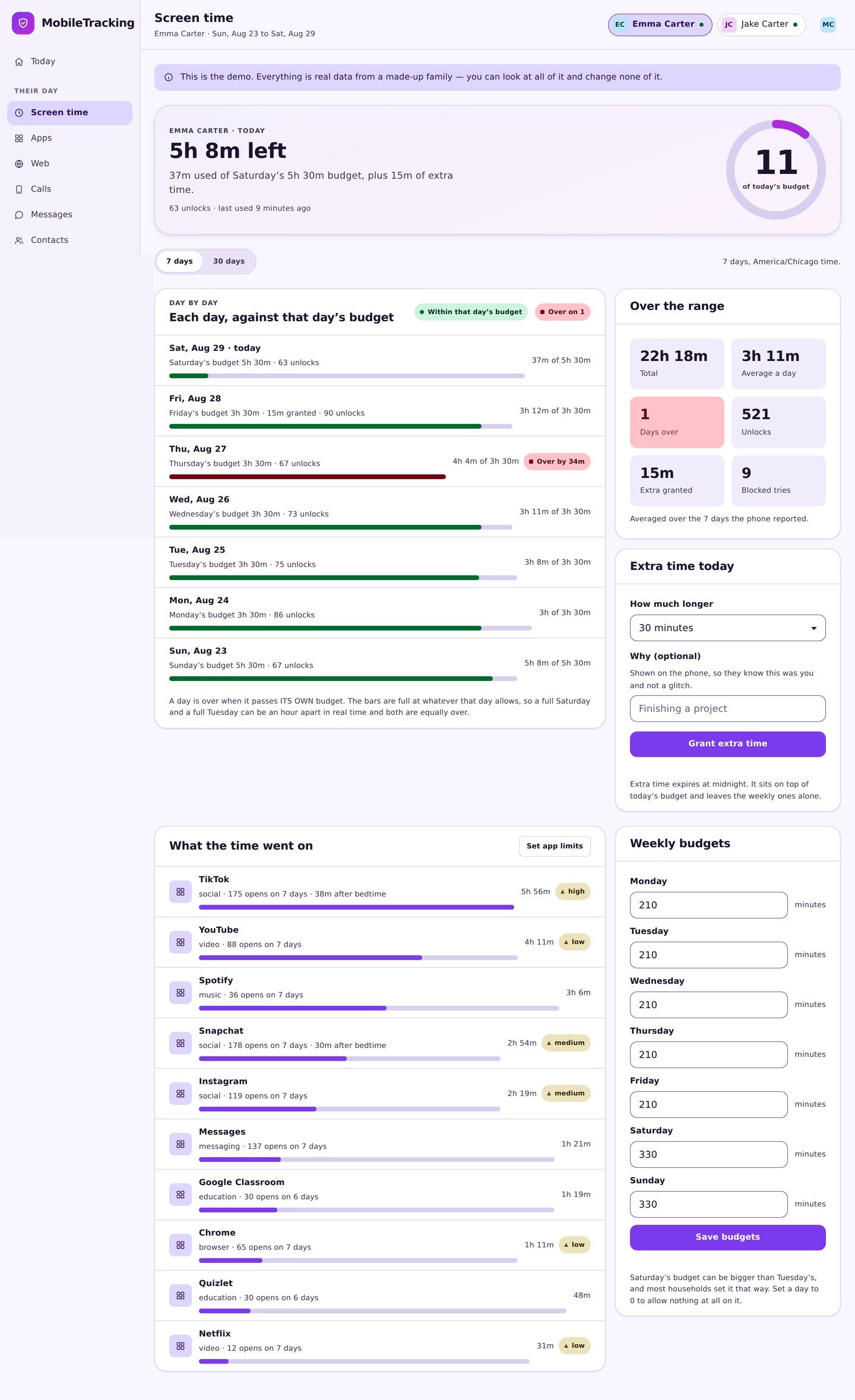
When you can point at a screen and say “TikTok’s taken five and a half hours this week, and nearly forty minutes of that was after your bedtime,” you’re having a specific, factual conversation. That lands completely differently from the vague, judgemental “you’re always on your phone,” which every teenager on earth will simply argue with. Facts are hard to argue with. Feelings are easy to dismiss.
So set a limit on the specific app that’s the problem, and leave messaging with friends and music alone. It’s a smaller, fairer ask, and fair asks are the ones that stick.
5. Change the room, not just the rules
Some of the most effective changes have nothing to do with settings on a phone. They’re about the environment around it.
The single best one is a family charging station somewhere that isn’t a bedroom, the kitchen counter, a hallway shelf. Every phone in the house, including yours, sleeps there overnight. This one habit quietly removes the entire category of 1am scrolling and pre-dawn group chats, and it does it without a single argument, because it’s just where phones go at night. It’s not a punishment; it’s a routine.
Phone-free zones do similar work. The dinner table and the car are the classic two. These aren’t about screen time as a number; they’re about protecting the small pockets of the day where families actually talk to each other. Set the default once and it becomes normal.
Turning off non-essential notifications is the quiet third one. Every notification is a little hook that pulls your child back to the phone. Kill the pointless ones, the games begging them to return, the apps announcing nothing, and you reduce the number of times a day the phone reaches out and grabs them in the first place.
6. Cut toward something, never toward nothing
“Get off your phone” with no alternative on offer just produces a bored, resentful kid staring at a wall, who will be back on the phone the second your attention drifts. You haven’t solved anything; you’ve created a vacuum.
Boredom is genuinely uncomfortable, and the phone is the fastest, easiest cure ever invented. So if you take the phone away, you have to leave a gap that something better can fill. That means planning the replacement before you make the cut.
Sometimes the replacement is another person, a friend invited over, a parent actually available to do something. Sometimes it’s an activity with a low barrier to starting: a sport, a build project, a walk, cooking dinner together. The specifics matter less than the principle. “Go do something else” is a dead end. “Let’s go to the park” or “come help me make this” is a door.
Over time, the goal is for your child to build a life interesting enough that the phone is one option among many, rather than the only thing standing between them and boredom.
7. Sort out your own phone habits first
This is the uncomfortable one, which is why it’s last.
Kids learn what to do with a phone by watching the adults around them, and no lecture survives contact with a parent who scrolls through dinner. If you’re checking work email at the table while telling your teenager to be present, they’ve clocked the contradiction, and it quietly undermines everything else you’re trying to do.
You don’t have to be a monk about it. But visibly living by the same rules, phone away at meals, not glancing at it mid-conversation, charging it in the kitchen overnight like everyone else, does more than any setting you could configure. It also removes the “that’s not fair” objection at the root, because the rules apply to the whole family, not just the person with the least power in it.
Write it down, together
One thing that turns all of the above from “rules Mum invented” into “rules we agreed on” is putting it in writing.
A family phone agreement doesn’t need to be a legal document. It’s a simple page you write together that says what the limits are, what earns extra time, what the bedtime and homework rules are, and what happens when a rule gets broken. The magic isn’t the paper. It’s the conversation you have while writing it, and the fact that your child had a real say in the terms.
People, including teenagers, follow rules they helped make far more willingly than rules imposed on them. Sit down, hash it out, let them argue a couple of points and win one or two, and sign it. You’ll be amazed how much less enforcement a rule needs when the person following it agreed to it in the first place.
What none of this will fix
It’s worth being straight about the limits of any of this, because sometimes screen time is the symptom, not the disease.
A child who’s disappearing into their phone for hours on end might be anxious, lonely, struggling at school, or avoiding something painful. The phone is the hiding place, not the problem. If you cut the screen time without ever asking what they’re hiding from, you can make things worse, you’ve taken away the coping mechanism without addressing the thing they were coping with.
So watch for the signs that this is deeper than habit: real distress when the phone goes away, using it specifically to escape difficult feelings, withdrawal from friends and things they used to love. If that’s what you’re seeing, the answer isn’t a stricter limit. It’s a conversation, and sometimes the help of a professional. Tools can shape behaviour. They can’t reach what’s underneath it. That part is yours, and it matters more than any setting.
How to actually roll this out
Don’t try to do all seven at once. A sudden crackdown feels like a punishment and provokes exactly the fight you’re trying to avoid. Ease it in.
In the first week, just protect bedtime and set up the charging station. That’s the highest-value change and the least controversial. Let it become normal. In the second week, look at the per-app numbers and add a limit to the one app that’s clearly the problem, and set your daily budget. By the third week, add the “earn more time” system and write the family agreement together. Introduce your own phone-free habits alongside, so it never looks like the rules are only for the kids.
Slow and predictable beats fast and dramatic every time. You’re not trying to win a week. You’re trying to build habits that hold for years.
If you use MobileTracking
MobileTracking is built around exactly this approach. You can set a different budget for each day of the week and put a limit on the specific app that’s eating the evening, while leaving the rest alone. Your child sees the time they have left on their own phone, so limits never ambush them, and they can ask for more with a reason you approve in a single tap. Bedtime blocks wind the phone down automatically, and the tasks feature lets kids earn bonus minutes by doing chores, turning screen time into something they work with rather than against. Because all of it is visible on their phone, none of it feels like a trap, which is the whole point.
Frequently asked questions
How much should I cut, and how fast?
Gradually. Cold-turkey cuts almost always backfire, because they feel like a punishment and provoke a fight. Trim the worst window first, nearly always the hour before bed, let it settle for a week, then adjust from there.
My teen insists everyone else has no limits. What do I say?
It’s usually not true, and it’s fine to say so calmly. But don’t get pulled into arguing about other families. Focus on your reasons and, crucially, bring your teen into setting the rules so they have some ownership of them rather than something to resist.
Should the rules apply to me too?
Wherever you reasonably can, yes. Shared rules, no phones at the dinner table, everything charges in the kitchen overnight, feel fair and work far better than “do as I say, not as I do.” Fairness is most of the battle with a teenager.
What if they just find a workaround?
Expect it, especially with older teens; it’s a sign of a normal, resourceful kid, not a failure. Close the obvious gaps, but treat a workaround as a conversation about trust rather than purely a technical problem to patch. The relationship does more work than the settings ever will.
My younger child melts down every time screen time ends. Help?
Transitions are hard for little ones. A visible countdown, a five-minute warning, and a consistent next activity (“time’s nearly up, then we’re doing bath and a story”) smooth the handover far better than an abrupt “give it here.”
Keep going
Read our guides on how much screen time is healthy by age, setting up parental controls on Android, and transparent monitoring for families. For trusted guidance beyond this site, HealthyChildren.org from the American Academy of Pediatrics is a well-regarded resource for parents: HealthyChildren.org.